
Past Event


About
Gulf Coast Reading Series featuring Lau Cesarco Eglin, Catherine Niu, Dillon Scalzo, and Zahra Tavana.
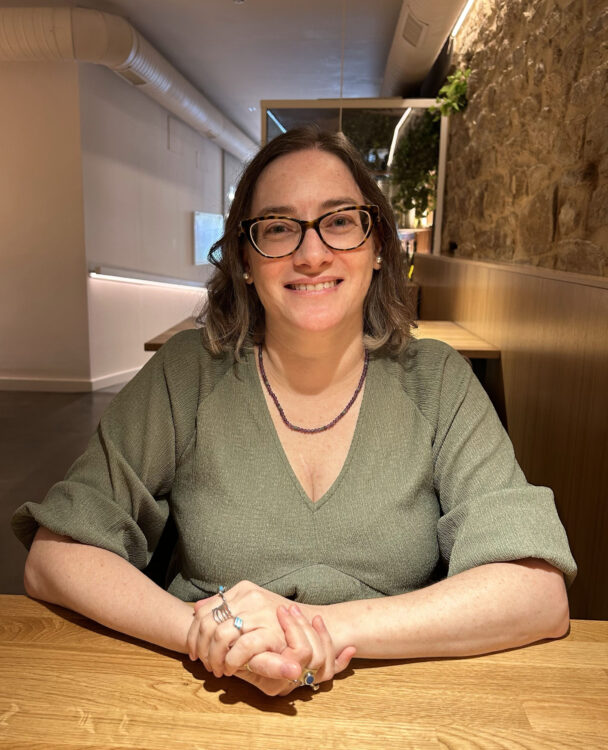
Laura Cesarco Eglin is a poet and translator from Uruguay. She is the author of six collections of poetry, including the chapbooks Between Gone and Leaving—Home (dancing girl press, 2023) and Time/Tempo: The Idea of Breath (PRESS 254, 2022). Her chapbook Break a Part is coming out in 2026 from Finishing Line Press. Her poems and translations (from the Spanish, Portuguese, Portuñol, and Galician) have appeared in many journals such as Asymptote, Zócalo: Public Square, MAYDAY, Figure 1, Eleven Eleven, Puerto del Sol, Copper Nickel, SRPR, International Poetry Review, Tupelo Quarterly, Columbia Poetry Review, Timber, and more. Cesarco Eglin is the translator of Claus and the Scorpion by the Galician author Lara Dopazo Ruibal (co•im•press, 2022), longlisted for both the 2023 PEN Award in Poetry in Translation and the 2023 National Translation Award in Poetry. She is also the translator of Of Death. Minimal Odes by the Brazilian author Hilda Hilst (co•im•press), which was the winner of the 2019 Best Translated Book Award. Her most recent translation is The Mistaken Place of Things by the Mexican poet Gabriela Aguirre (Eulalia Books, 2024). Sardine, Cesarco Eglin’s translation of Miriam Reyes’ Sardiña is forthcoming from Ugly Duckling Presse in 2026. Cesarco Eglin is the publisher of Veliz Books.
Catherine Niu’s stories and essays have appeared or are forthcoming in McSweeney’s Quarterly, Alaska Quarterly Review, Michigan Quarterly Review, Best Small Fictions 2025, The Cincinnati Review, AGNI, The Gettysburg Review, The Best American Essays 2024 notable list, and elsewhere. She lives in Houston, where she is an Inprint Fondren Foundation fellow and fiction editor at Gulf Coast Journal.
Dillon Scalzo is a poet and translator with a passion for working back and forth between the mediums of Spanish and English. He spent thirteen years based on the U.S./Mexico border in San Diego, California/Tijuana y Tecate, Baja California, while completing a BA, an MFA in Creative Writing, and working as an educator. He has studied in México, Spain, and completed a U.S. Fulbright grant in Uruguay. Dillon is interested in: all things transfronterizo, especially the movement of poetry and art across terrestrial, liquid and imagined borderlands; multilingual education/pedagogy; and the synthesis of radical and traditional writing techniques. He teaches Spanish at the University of Houston as a PhD candidate in Hispanic Studies, and is completing a thesis on Slow Open Water Swimming as a methodology for multigenre writing.
Zahra Tavana is a PhD candidate in English Literature at the University of Houston. Her research focuses on refugee literature, borderization, and the political order as a structure of death, exploring how societies of the Global North pursue a planetary renewal of colonial relations_ camps as new colonies_ amplified through the War on Terror and the creation of a “state of exception.” Her work bridges Persian American and Mexican American life writing, examining memoir and testimony as forms of “writing and righting”_ what Caren Kaplan calls “outlaw” genres through which displaced subjects claim the right to narrate. At the University of Houston, she teaches courses centered on questions of migration, violence, and the human condition. In addition to her research and teaching, Zahra translates the poetry of Forough Farrokhzad (1934-1967), the pioneer of Iranian feminist modernism. Her English translations of Farrokhzad’s poetry have appeared in The Kenyon Review, with several others currently under review for publication.
Series
Gulf Coast: A Journal of Literature and Fine Arts presents the poetry and prose of UH graduate students, paired with prominent featured visiting writers, at Lawndale Art Center. Participating students come from the MFA and PhD programs in Creative Writing. The monthly Gulf Coast Reading Series supports the journal’s mission to spotlight the work of both esteemed and emerging writers with voices as diverse as the Gulf itself.