


Lorena Molina a place to hold you

On View
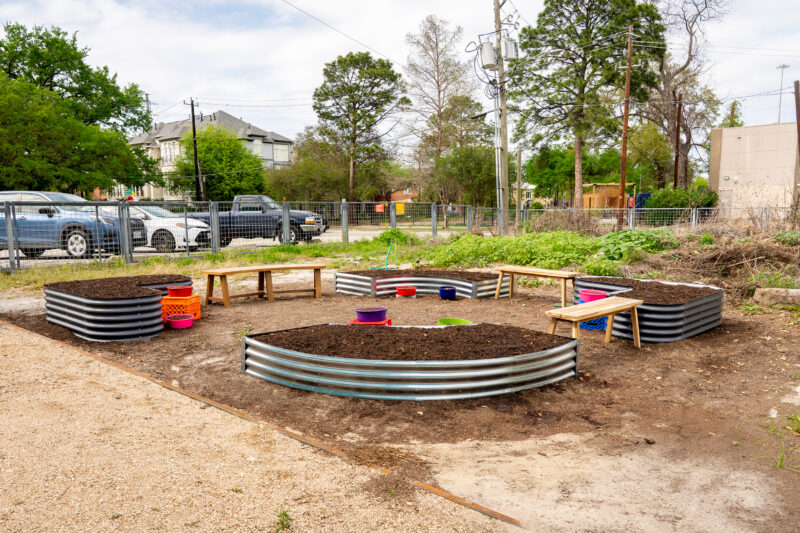
Lorena Molina: a place to hold you is a corn installation for reflection and conversation on immigration, agency, ideas of return, and communal care during violent times.
Lorena shares, “Corn is a central crop in Mesoamerica, in my Salvadoran upbringing, and throughout the places I have called home in the Midwest and Central New York. This plant has been carried across hemispheres, traded among nations, held in ceremonies, and tended through thousands of years of Indigenous knowledge. Corn, like many migrant communities, is also a displaced body. Its story is political, shaped and reshaped by colonial extraction, global trade agreements, forced transformations in labor which determines who gets to tend, enjoy, and benefit from the land.
“Corn also reflects the political realities that shape movement today. After NAFTA* and later CAFTA DR*, the influx of subsidized corn from the United States destabilized rural economies in Mexico and Central America. Farmers were pushed into economic precarity, which accelerated and forced migration north. A crop that once rooted communities in place became evidence of how global policy displaces both land and people. Meanwhile, in the United States, this same crop relies on immigrant labor to tend and harvest even as the systems that depend on that labor routinely refuse dignity, agency, and care to the very people whose hands sustain it.
“At the same time, corn carries ancestral knowledge and embodies the ways my ancestors nurtured one another and fought for survival while holding its complicated contemporary history. By planting [corn] at Lawndale, I draw a line from my family’s stories in El Salvador to present day histories of migration across the Americas.
“The tended garden that will grow for multiple seasons at Lawndale stands in direct contrast to the state’s violent holding spaces such as detention centers, prisons, and border checkpoints, where waiting becomes a form of punishment, surveillance, and separation from kin. This installation is meant to create a tender, anti-carceral space where being held is an act of care. The space will be activated with rituals, conversations, music, and workshops that highlight how we care for each other in times of violence.
“This work continues my ongoing practice of creating spaces for belonging and collective imagination. The garden becomes a site where land and community hold one another. It is a place planted to hold you, to hold us, as we imagine a gentler and safer future rooted in agency, dignity, and mutual care.”
* NAFTA (North American Free Trade Agreement) and CAFTA DR (Central America-Dominican Republic Free Trade Agreement, a trade agreement between the United States, Costa Rica, Dominican Republic, El Salvador, Guatemala, Honduras, and Nicaragua)
Installation images courtesy of Sol Diaz-Peña.
Lorena Molina is a Salvadoran multidisciplinary artist, educator, and curator. She is an Assistant Professor of Studio Art Practice at San Francisco State University. She’s also the founder and the director of Third Space Gallery, a community space and gallery that supports and highlights BIPOC artists.
Through the use of photography, video, performance, and installation, Molina explores identity, intimacy, pain, and how we witness the suffering of others. The work interrogates relationships as political acts that are guided by negotiations of power and privilege.
At the core of her work is an exploration of spatial inequalities and challenges that oppressed groups face in constructing places and establishing a sense of belonging. The work is driven by a deep sense of displacement experienced after a 12-year-old civil war forced her and her family to migrate to the United States. Most of her work stems from a need to find and build community in a tender, accountable way; within this, Molina seeks to have challenging conversations that urge others to actively question their position and privileges in society.
Molina received her Master of Fine Arts from the University of Minnesota in 2015 and her Bachelor of Fine Arts from California State University, Fullerton, in 2012. Molina has been the recipient of numerous awards and fellowships, including the Diversity of Views Fellowship, the Christopher Cardozo Fellowship, two Truth and Reconciliation Grants from ArtsWave, Hot Picks by Smack Mellon, Vacant to Vibrant Grant, Fotofocus Exhibition Grant, The Idea Fund, Artpace International Residency, and The Kala Art Institute Fellowship.
Molina’s work has been exhibited and performed nationally and internationally, including at the Contemporary Arts Center (Cincinnati); The Kemper Museum of Contemporary Art; the Southeast Museum of Photography; Art League, Houston; Assembly Projects (Houston); Wave Pool Gallery; The Carnegie (Covington, KY); Vox Populi; FSU Museum of Fine Arts; EXPO Chicago; The Armory Show; The Rubin Center; SF Camerawork; The Berkeley Art Center; Root Division; The Beijing Film Academy; and across the piazzas of Florence, Italy.
Her work has been reviewed and featured in Hyperallergic, Glasstire, Eazel, The Wall Street Journal, The Careful Photograph with Tarrah Krajnak, Burnaway, Artillery, Ocula, Collector Daily, CAA Reviews, UnderMain, Movers and Makers, CityBeat, LENSCRATCH, Square Cylinder, AEQAI, Not Real Art, The Columbus Dispatch, BTW Berkshires, Latino News Network, Rice Thresher, The Daily Tar Heel, Syracuse New Times, The Daily Orange, the Document Journal, and among others.
Her curatorial work includes Photography and Tenderness co-curated with Eliza Gregory at Wavepool Gallery, Flowers for Here at Third Space Gallery, Learning Curve at the Houston Center for Photography, On Belonging at Third Space Gallery, and the upcoming exhibition Slow Burn at the Fine Arts Gallery at San Francisco State University (2026).
In the classroom, Molina works with students to understand the way that images are laden with history and vocabulary. Images tell stories, but who gets to tell the story matters.
a place to hold you is supported in part by a grant from the Alice Kleberg Reynolds Foundation.
